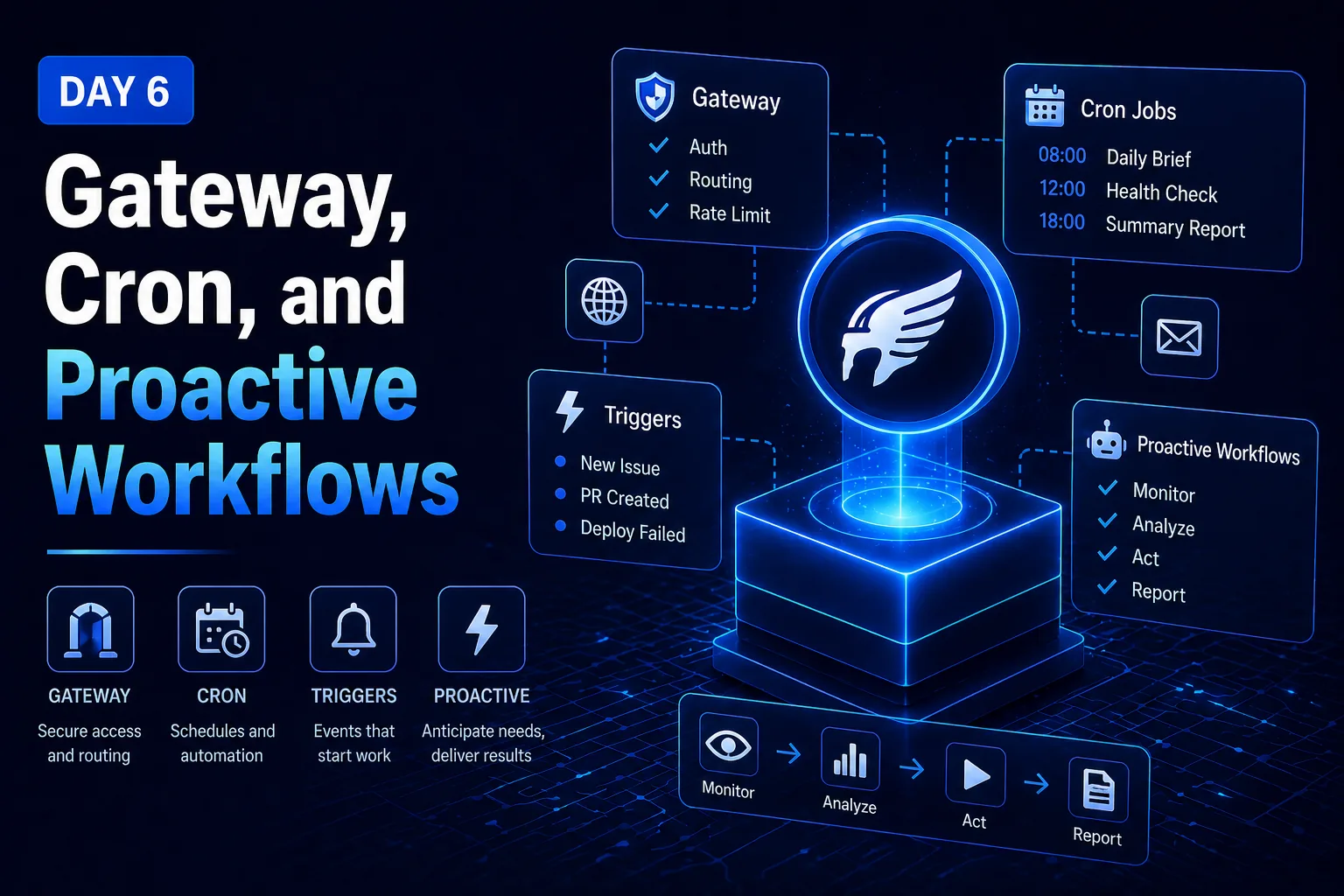
Hermes Agent 6-Hour Crash Course: Hour 6 - Production Workflow Checklist
The final hour turns learning into an operating checklist. A production Hermes Agent workflow is not just a clever prompt. It has an owner, a trigger, inputs, permissions, verification, logging, and a rollback plan.
Define the workflow
Write the workflow in plain language:
- What starts it?
- What should Hermes Agent inspect?
- What may it change?
- What must it never change?
- What output should it produce?
- How is success verified?
If these questions are hard to answer, the workflow is not ready for automation.
Add safety rules
Production workflows need explicit safety rules. Require approval for destructive commands, credential changes, billing changes, database migrations, public publishing, and deployment actions. Keep secrets out of memory and content. Keep logs for recurring workflows.
The safest automation is narrow automation. Start with one predictable task and expand only after it works repeatedly.
Measure usefulness
After running the workflow several times, measure whether it actually saves time. Track false starts, manual corrections, missing context, and verification failures. Improve the prompt, memory, or skill before adding more permissions.
Hermes Agent should reduce coordination cost. If a workflow creates more review burden than it removes, narrow it.
Hour 6 checkpoint
By the end of the crash course, you should have one production-ready workflow note. It should include owner, trigger, allowed tools, permissions, expected output, verification command, escalation rule, and rollback path. That note is the bridge from experimentation to daily use.