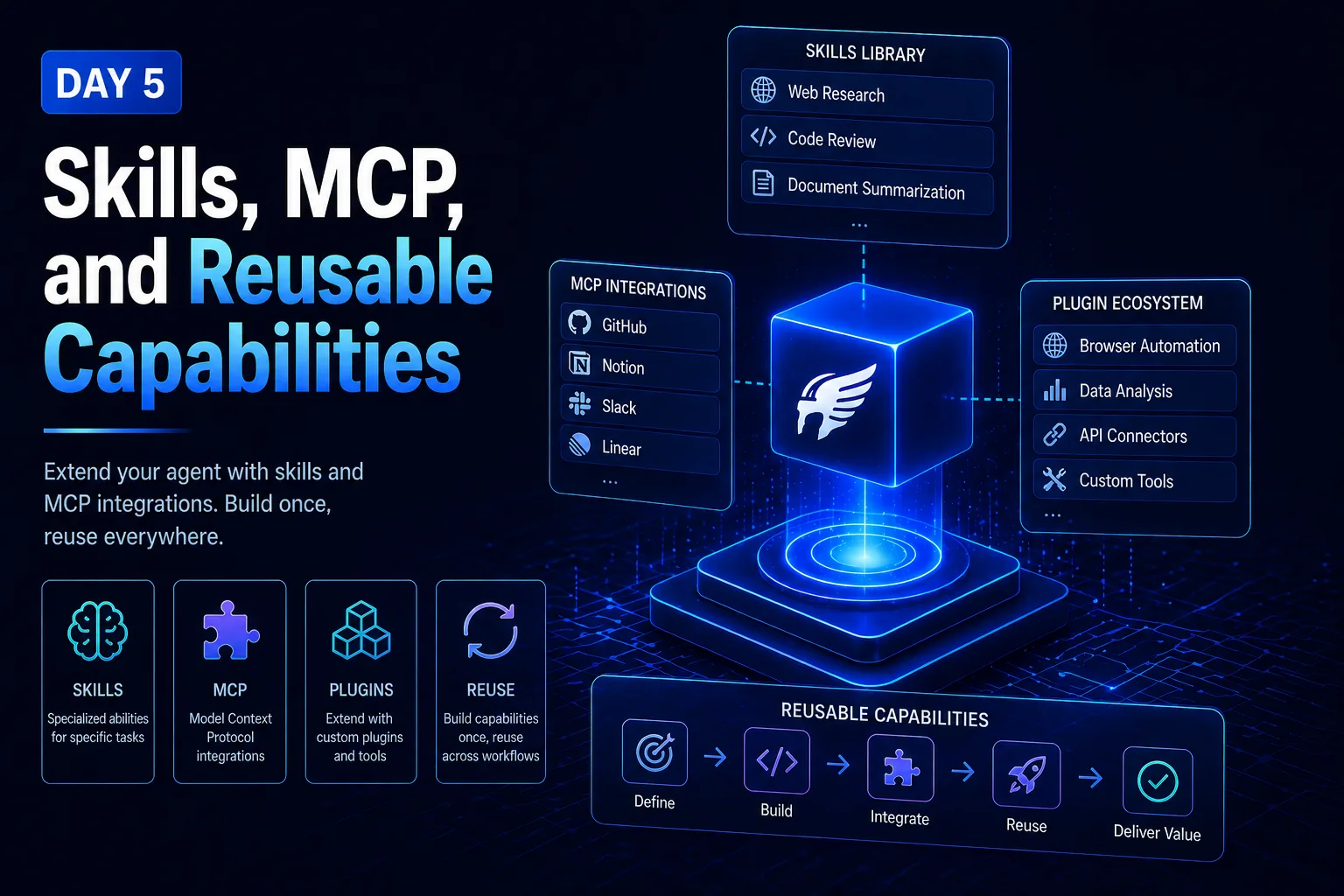
Hermes Agent 6-Hour Crash Course: Hour 5 - MCP, Gateway, and External Systems
The fifth hour moves beyond the local project folder. Hermes Agent becomes more useful when it can reach the systems where work actually happens: repositories, issue trackers, documentation platforms, databases, design tools, and messaging channels. The key is to connect external systems deliberately.
When MCP helps
MCP is useful when Hermes Agent needs structured access to a system rather than pasted context. Good MCP use cases include searching internal docs, reading issue metadata, querying a database, or accessing a design system. The value is repeatable access with a clear interface.
Do not add MCP servers just because they exist. Add them when they remove manual context copying or make a workflow safer and more reliable.
When gateway helps
Gateway patterns are useful when work begins outside the local chat: a message arrives, a webhook fires, or a scheduled workflow needs a response. Gateway mode should normalize input, route to the right instruction, execute within known permissions, and return a concise result.
Start with read-only gateway workflows. Summaries, checks, reports, and triage are safer first steps than automatic mutation.
Permission design
External systems increase risk. Use narrow permissions, separate read and write access, and require approval for irreversible actions. A good integration makes it obvious what the agent can see and what it can change.
Every external workflow should have logs. If a task touches another system, you need enough traceability to understand what happened later.
Hour 5 checkpoint
At the end of this hour, choose one external system that would genuinely improve your workflow. Define the input, allowed operations, output, permission boundary, and verification rule before connecting it.